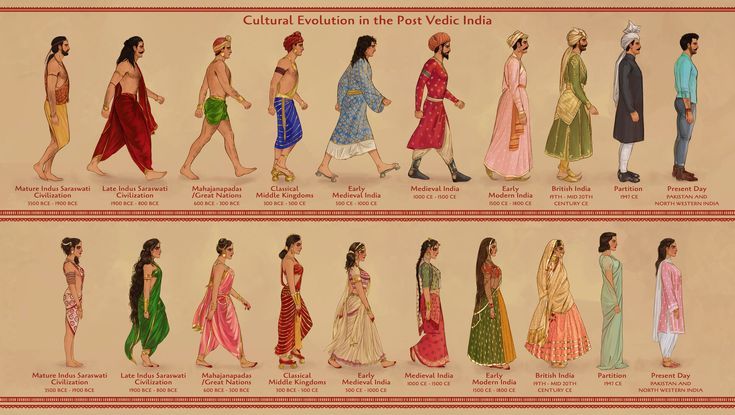
🏺 1. Ancient Hindu Attire: Simplicity & Symbolism
In the Vedic period (1500–500 BCE), simplicity was key. Clothing was made from natural fibers like cotton and silk. Men typically wore dhotis, while women adorned themselves in sarees, wrapped in various regional styles. The color white, symbolizing purity, was commonly worn by priests.
📌 Fun Fact: The Upanayanam (sacred thread ceremony) introduced the sacred thread (yajnopavita), still worn today during rituals.
🛕 2. Medieval Influence: Royal Patronage and Temple Culture
During the medieval era, Hindu attire was influenced by royal dynasties like the Cholas and Guptas. Temple priests began to wear angavastram (a shawl over the shoulder), while elaborate headgear, jewelry, and intricate embroidery were introduced, especially in South India.
Garments were not only spiritual but reflected one’s varna (social order) and status in the community.
🧶 3. Colonial Impact: Fusion of East & West
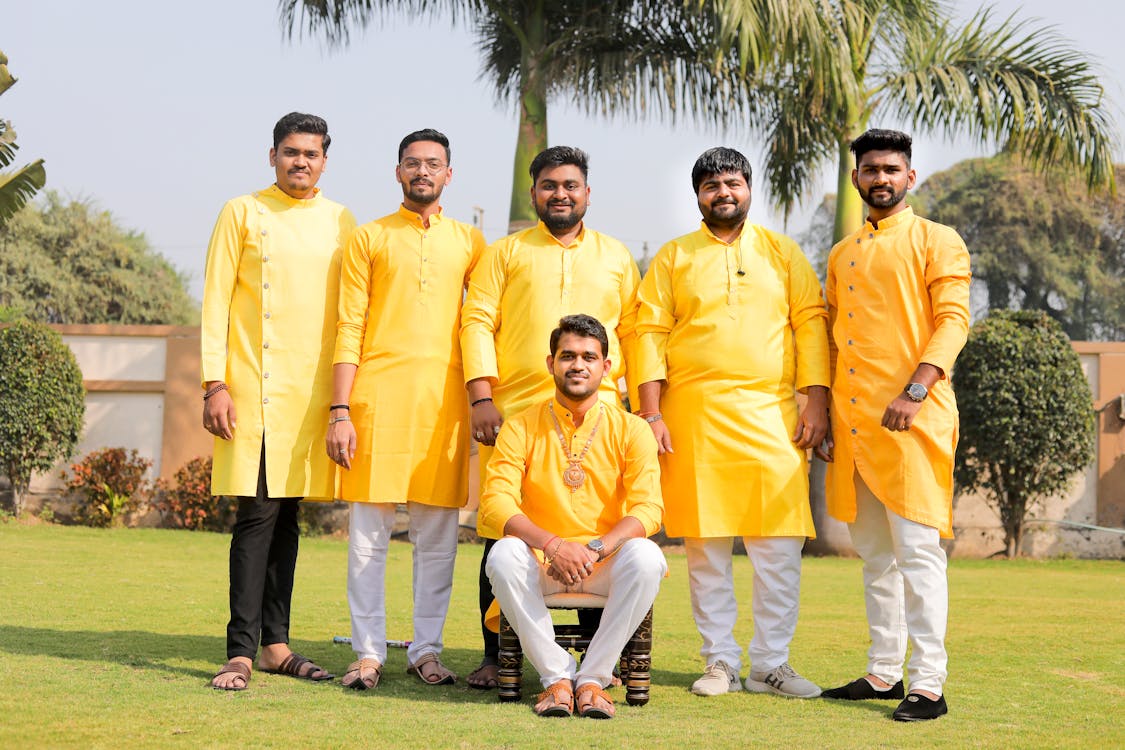
British colonization led to the blending of Western cuts with traditional attire. While many continued to wear traditional kurta-pajamas, there was a subtle shift toward stitched garments like blouses for sarees and jackets over kurtas. Religious wear, however, remained largely unchanged during rituals.